
Water Damage Restoration in Kent, WA
Water damage restoration is a different job from a plumbing repair. Once a leak or flood has soaked flooring, drywall, or a subfloor, drying and restoring the structure itself is its own specialty, and it runs on its own dedicated line.
Water Cleanup For Kent Homes
A plumbing repair fixes the pipe, valve, or appliance that caused a leak. Water damage restoration is the separate job of drying out and repairing everything the water actually touched, from soaked carpet pad to a swelling subfloor to drywall that's started to soften. We handle both kinds of calls, but they're scoped and priced differently, and this line is dedicated specifically to the cleanup and drying side.
Kent sits on the flat floor of the Green River Valley, a real historic floodplain that King County's flood control district manages with levees along the Green River today. That geography means valley-floor homes see real, ongoing water intrusion risk from groundwater and heavy seasonal rain, on top of the more common causes like a failed water heater, a burst supply line, or an overflowing appliance.
Signs You Have Real Water Damage
Visible Water Stains
Yellow or brown staining on a ceiling or wall means water has already traveled through the material, not just touched the surface.
Musty Or Damp Smell
A persistent musty odor, especially in a basement or crawlspace, usually means moisture has been sitting somewhere out of sight.
Warped Or Soft Flooring
Flooring that feels soft, springy, or has visibly buckled has absorbed water and needs to be addressed before mold has a chance to establish.
Peeling Paint Or Bubbling Drywall
Paint or drywall that's bubbling or peeling away from the wall is a sign moisture is trapped behind the surface.
Before We Arrive
Stop The Source If It's Safe
If the water is coming from a visible, reachable shutoff (a supply line or the main valve), turning it off can limit how much material gets wet.
Cut Power To The Area If There's Standing Water
Don't walk through standing water near outlets or electrical panels. Shut off power to that area at the breaker if you can do so without stepping in water.
Move Valuables To A Dry Area
Get furniture, electronics, and anything irreplaceable up off a wet floor or out of the affected room.
Photograph The Damage
Take photos and video before cleanup starts. It genuinely helps with an insurance claim, whatever your coverage turns out to be.
Extraction, Drying, And Mold Prevention
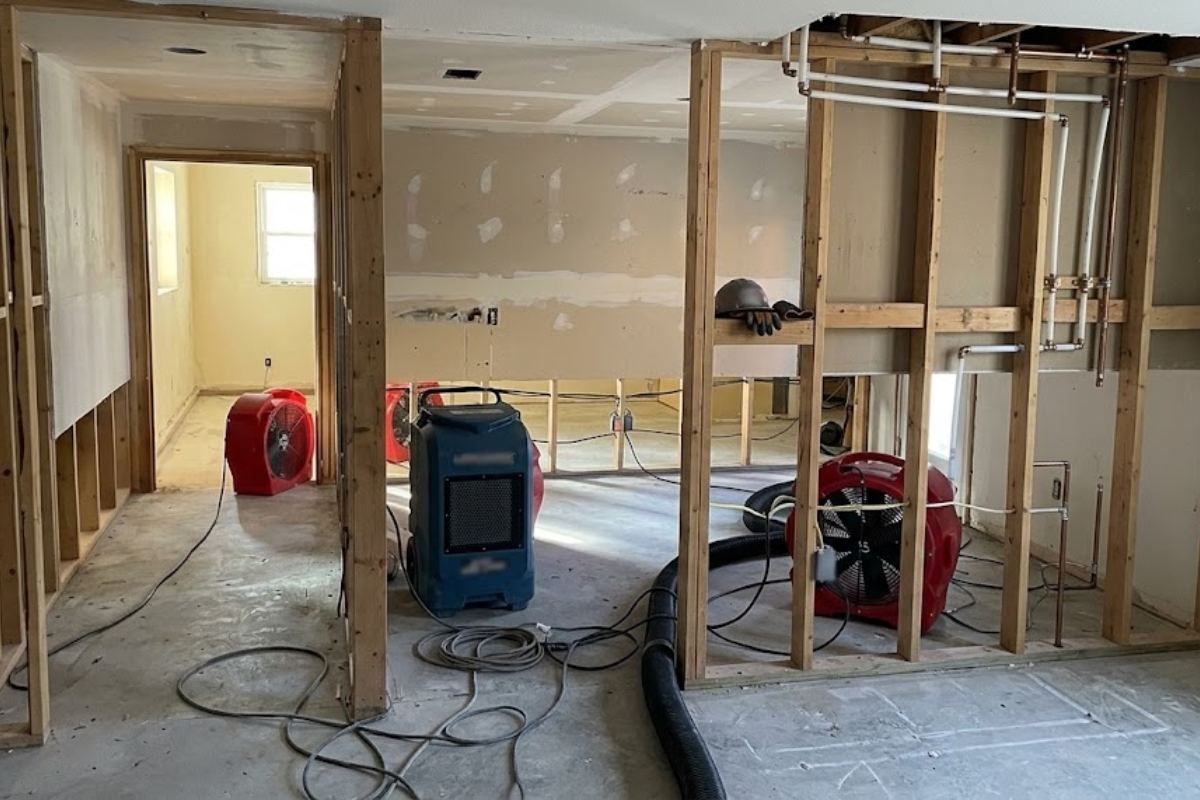
The first step is water extraction, physically removing standing water with pumps and wet vacuums before anything else. From there we set up industrial air movers and dehumidifiers and use moisture meters to map exactly which materials are still wet, since drywall and subfloor can hold moisture well after a surface looks dry. This process generally follows the IICRC S500 water damage restoration standard, the published industry reference for structural drying.
Water is classified by source: clean water from a supply line is the easiest to work with, while water that's been sitting or came from a sewer backup is treated as contaminated and requires more extensive removal of affected materials. We'll tell you honestly which category your situation falls into and what that means for the scope of work, rather than assuming the best case. We don't make specific health claims about mold exposure; that's a conversation for a physician if you have concerns, but we do treat and monitor for mold growth as a standard part of the drying process.
Active Leak Or Standing Water?
Our water damage line is answered 24/7, separate from our plumbing dispatch.
What Affects The Price
Free written estimates on non-emergency calls; emergency work gets an upfront price before anything starts. Water damage from a sudden event like a burst pipe is often covered under a standard homeowners policy, though coverage varies. We recommend confirming the specifics with your insurer before work begins.
Common Questions
Yes. A plumbing repair fixes what caused the leak. Water damage restoration is the separate job of drying out and repairing the structure and materials the water reached, and it runs on its own line so both jobs get the right specialist.
We treat and monitor for mold growth as part of the standard drying process. We don't make specific health claims about mold exposure; that's a conversation for your physician if you have health concerns.
Water damage from a sudden event like a burst pipe is often covered, but coverage details vary by policy and insurer. We recommend confirming your specific coverage before work begins.
It depends on how much material absorbed water. A single room can sometimes dry in a couple of days, while a larger or more saturated area can take longer to confirm fully dry with moisture meters.